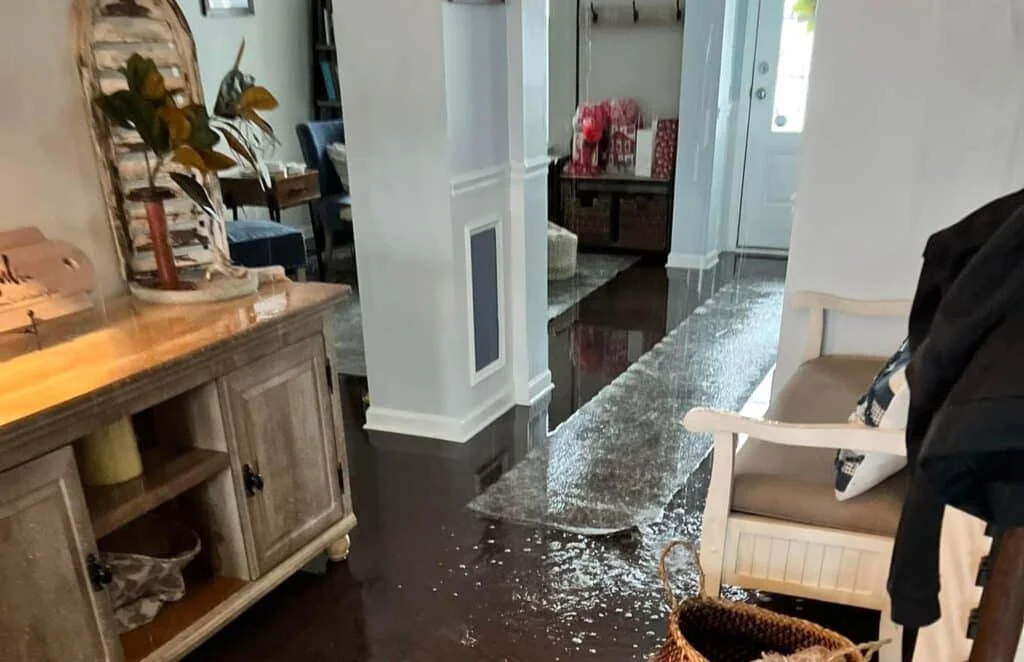

The restoration invoice is rarely the real cost. Phased reopening, RTO planning and a signed priority agreement are what compress the closure.
The real cost is rarely the repair
When a pipe fails in a 12,000 square foot office, the restoration invoice might be $38,000. The cost of being closed for eleven business days is usually several times that — and unlike the repair, most of it is invisible on any invoice.
| Cost | Visible? | Typical impact |
|---|---|---|
| Restoration work | Yes | Invoiced, usually insured |
| Lost revenue | Partly | Covered by business interruption, after a waiting period |
| Payroll during closure | Yes | Continues whether or not you trade |
| Customer attrition | No | Some never return; the largest long-run loss |
| Staff attrition | No | Hourly workers find other jobs during a long closure |
| Contract penalties | Sometimes | SLA breaches, delivery failures |
Continuity planning exists to compress the closure, not to eliminate the incident. The measurable objective is simple: reduce days closed, and reduce the fraction of the business that has to close at all.
Two numbers every plan needs
Borrow two definitions from IT disaster recovery; they work just as well for physical premises.
- RTO — Recovery Time Objective. How long can this function be unavailable before the damage becomes existential? For a hotel's front desk, hours. For a corporate training room, weeks.
- RPO — Recovery Point Objective. How much data or work-in-progress can you afford to lose? For a restaurant's POS records, one day. For a legal practice's document system, minutes.
Run this against every function in the business and you get a priority list. That list, not the floor plan, dictates the restoration sequence: the crew works on what reopens revenue first, then everything else.
Do this once, on paper
List your top ten business functions. Next to each, write the RTO in hours or days. Circle everything under 48 hours. That circled set is your continuity plan's scope — the rest can wait, and knowing that in advance saves days of argument during the incident.
Phased reopening: the operational lever that saves the most money
The instinct after damage is to close the whole site and wait. Most of the time that is unnecessary. With containment, a building can be restored in zones while the rest continues to trade.
How zoning works in practice
- Hard containment barriers with negative air pressure separate work zones from occupied zones.
- Separate crew access and equipment routes keep restoration traffic out of customer areas.
- Work is scheduled around trading hours: noisy demolition at night, quiet drying during the day.
- Air quality is monitored on the occupied side and documented daily.
Sector examples
Hotel — restore floor by floor, keeping inventory sellable. Move the affected room block, do not close the property.
Restaurant — kitchen and cold line are triaged first, since health authorities gate reopening on them. Dining room finishes can lag by a week if the kitchen is compliant.
Retail — overnight work with barriers relocated before opening; sales floor stays open at reduced footprint.
Office — department-level relocation within the building, with server rooms and comms cabinets protected as the highest priority regardless of where the water was.
Business interruption insurance: what it pays and what trips it up
Business interruption (BI) coverage replaces lost net income and continuing expenses during the restoration period. It is one of the most valuable coverages a commercial policy carries and one of the most frequently underclaimed.
Mechanics that matter
- Waiting period. Typically 48 to 72 hours before coverage begins. Losses inside the waiting period are yours.
- Period of restoration. Runs until the property should reasonably be repaired — not until revenue recovers. The gap between those two dates is a common dispute.
- Extended period of indemnity. An endorsement covering the ramp-back after reopening. Worth buying; commonly 30 to 90 days.
- Contingent BI. Covers losses caused by damage to a key supplier or customer's premises, not your own.
- Civil authority. Covers closure ordered by authorities — for example an access cordon after a neighbouring incident.
What a BI claim is calculated from
Monthly profit-and-loss statements, tax returns, payroll records, and point-of-sale or booking data, usually for the previous 24 months, adjusted for trend and seasonality. If those records live only on the server that just got wet, the claim stalls before it starts. Keep 24 months of financials off-site or in cloud storage.
The priority response agreement
After a regional event — a hurricane, a freeze, a flood — every commercial property in the county calls a restoration contractor on the same morning. Capacity is finite and allocated in the order commitments were made.
A priority response agreement is signed before anything happens. It typically includes:
- Guaranteed response window for your sites, ahead of non-contracted work.
- Pre-agreed rates, so pricing is not negotiated during a catastrophe.
- Pre-loaded site data: floor plans, shut-off locations, access, key contacts, hazardous materials.
- A named account supervisor who has physically walked your building.
- An annual walkthrough to keep the data current.
It usually costs nothing to put in place. The value is entirely in queue position and in the twenty minutes your crew does not spend looking for a water main at 3 a.m.
The information packet
Whether or not you sign an agreement, prepare a single document with: site addresses, utility shut-off locations and photographs, floor plans, alarm and access codes held securely, key-holder contacts, insurance carrier and policy numbers, and a list of critical equipment. Store it in cloud storage and give a copy to two people who do not work in the same building.
Communication during the incident
How you communicate determines customer attrition more than how fast you repair.
Staff
Contact within the first two hours, from a list stored off the office network. State clearly whether they are paid, whether they should report, and when the next update comes. Uncertainty is what makes people find another job.
Customers
Publish something the same day — a website banner, social post, voicemail message and door notice. Say what happened in one sentence, what is available now, and when you will next update. Vagueness reads as closure.
Suppliers and partners
Pause deliveries that cannot be received, redirect what can go elsewhere, and inform anyone with a contractual dependency early enough to protect the relationship.
Insurer
One named person owns the relationship with the adjuster. Multiple people sending conflicting information to a carrier slows a claim more than any other single factor.
A one-page plan you can actually finish this week
The continuity one-pager
- Critical functions and RTO for each.
- Alternate locations — where each critical function runs if this building is unavailable.
- Contact tree — staff, key customers, suppliers, insurer, restoration contractor, utilities.
- Site data — shut-offs, plans, access, alarm, hazardous materials.
- Data recovery — where backups are, who can restore them, last tested date.
- Insurance summary — carrier, policy numbers, BI waiting period, deductibles.
- Authority matrix — who may authorise emergency spend, and up to what value.
- Review date — twice a year, in the calendar, with an owner's name against it.
A plan that fits on one page and is genuinely current beats a forty-page binder nobody has opened since 2019. Test it once a year with a tabletop exercise: pick a scenario, sit around a table for ninety minutes, and see where the plan falls apart. It always does — that is the point of testing.
Dealing with this right now?
Our dispatch desk is staffed 24/7. Call +1 888-216-6362 or request an appointment and a coordinator calls you back in minutes.