
Pre-season vulnerability audit
Roof, openings, garage door, soffits, drainage and grounds assessed with a prioritised fix list before June.
Pre-season hardening, pre-landfall staging and post-storm stabilisation — from tarping a roof at dawn to rebuilding an envelope that will hold next time.
Named storms create demand spikes that no local contractor can absorb. Every property in a county calls the same morning, and capacity is allocated in the order commitments were made. That is why our storm division works on a twelve-month cycle rather than a seasonal one: hardening audits in spring, equipment and crew staging as systems form, and stabilisation the moment conditions allow.
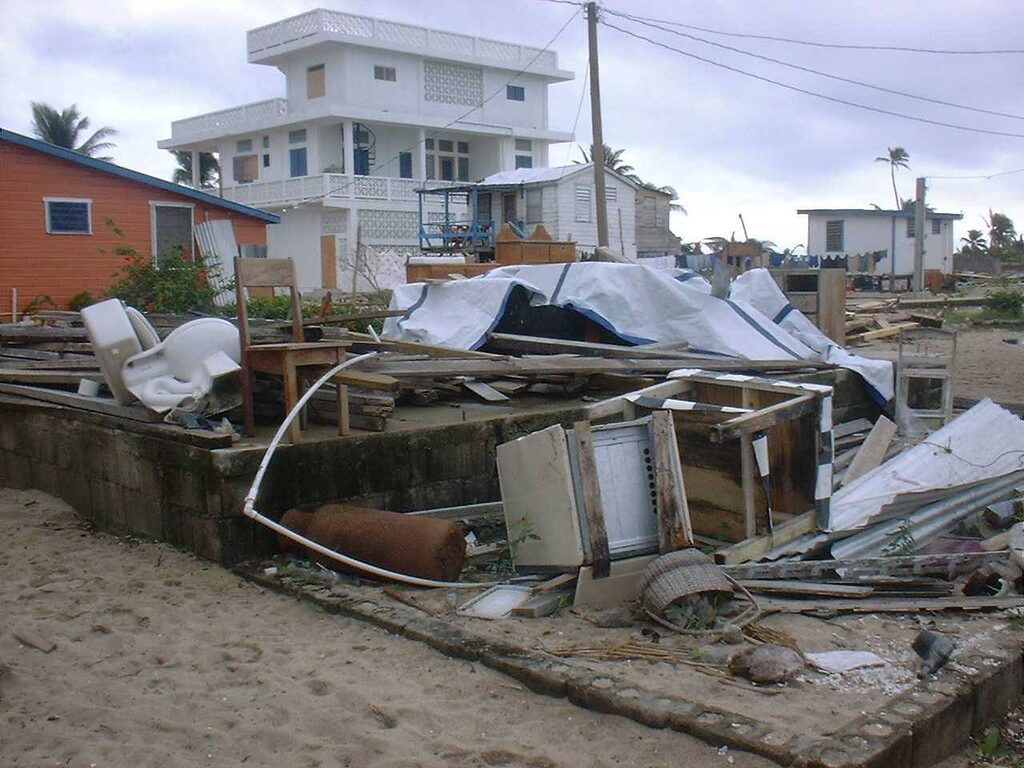
After landfall the priority sequence is fixed — make safe, keep water out, remove standing water, then dry and rebuild. Skipping straight to repairs while a roof is still open simply funds the same work twice.
Roof, openings, garage door, soffits, drainage and grounds assessed with a prioritised fix list before June.
Roof tarps and window panels installed as soon as wind speeds allow crews to work safely.
Trees, structural debris and hazardous material removed with the access route to the building restored first.
Wind-driven rain and surge water extracted and dried, with flood water treated as Category 3 throughout.
Roof decking, windows, doors, siding and soffits restored to code — often to a better standard than before.
Pre-loss condition, damage photography, moisture logs and scope written to survive carrier review.
Audit, hardening recommendations, priority response agreement and site data captured.
Crews, generators and equipment staged outside the forecast cone; your sites queued by priority.
Safety sweep, tarping, board-up, debris clearance and standing water removal.
Drying, structural repair, finishes and a final envelope inspection before the next season.
| Category | Sustained winds | Typical building impact |
|---|---|---|
| 1 | 74–95 mph | Roof covering, gutters and siding; tree limbs down |
| 2 | 96–110 mph | Major roof and siding damage; extended power loss |
| 3 | 111–129 mph | Roof decking and gable ends lost; widespread water intrusion |
| 4–5 | 130+ mph | Severe structural damage; area uninhabitable for weeks |
As soon as authorities lift access restrictions and wind speeds allow safe work — usually 12 to 48 hours. Clients with a priority response agreement are reached first, which is the entire point of signing one in May.
Generally no. Standard homeowner policies exclude flood, which includes storm surge and rising surface water. Flood is covered by a separate NFIP or private flood policy, which typically has a 30-day waiting period before it takes effect.
Be careful. Verify the state licence number, confirm insurance directly with the insurer rather than from a certificate handed to you, never pay a large upfront deposit, and read any assignment-of-benefits document line by line before signing.
Yes. Multi-site work is run by a dedicated account supervisor with a documented sequence, and we mobilise partner crews from outside the affected region so local capacity limits do not delay you.
Over 2,400 completed projects and a 4.9/5 average rating across residential and commercial clients.
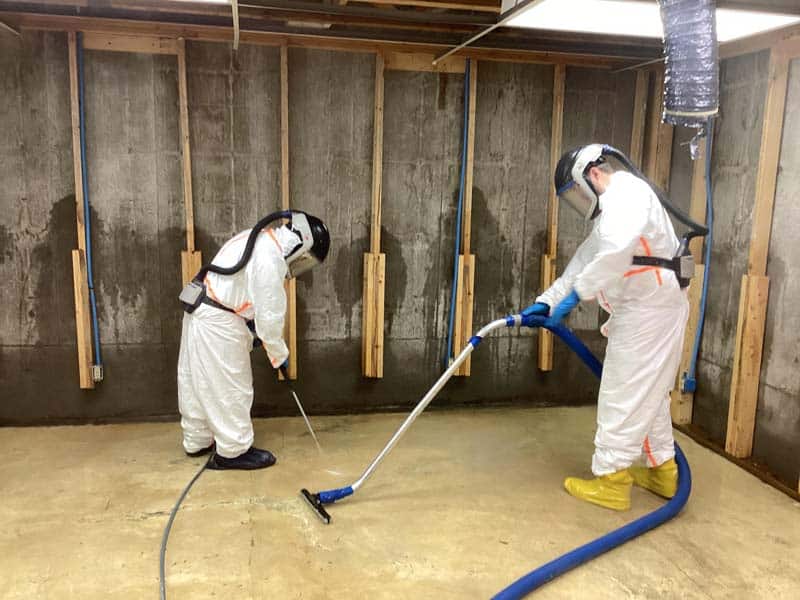
Extraction within the hour, structural drying to a documented dry standard, and moisture logs your adjuster will accept …
Explore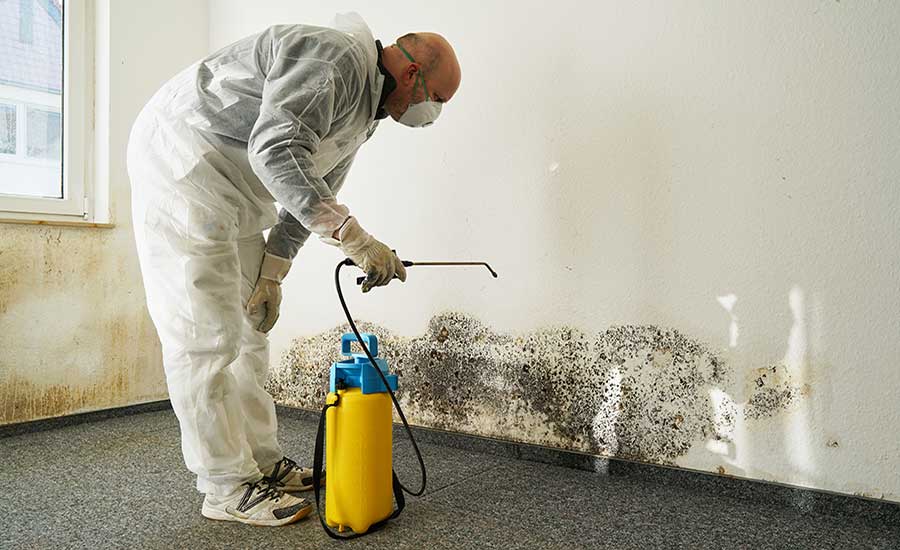
Containment, negative air, removal to IICRC S520 — and an independent third-party clearance test we deliberately do not …
Explore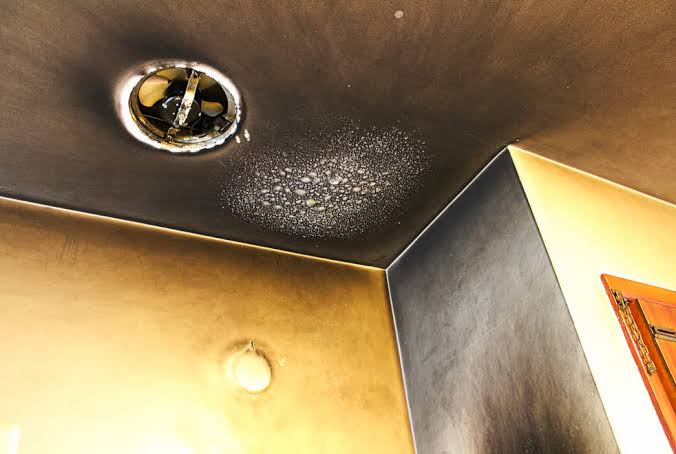
Board-up the same night, soot removal matched to the residue type, contents restored off-site, and odour eliminated at t…
ExploreTell us what happened and a coordinator will call you back within 15 minutes — day, night, weekend or holiday.