
Moisture investigation
Thermal imaging, borescope inspection and meter readings locate the water source before anything is opened up.
Containment, negative air, removal to IICRC S520 — and an independent third-party clearance test we deliberately do not perform ourselves.
Mold control is moisture control. Spores are present in every building; what changes is whether the materials they land on are wet enough to feed them. That is why every remediation we run starts with finding and fixing the water source, and why any contractor who skips that step is selling you a repeat visit.
Work follows the IICRC S520 standard: containment with negative air pressure, removal of affected porous materials inside the containment, HEPA cleaning of everything that remains, drying to the documented dry standard, and clearance verified by a hygienist who does not work for us.
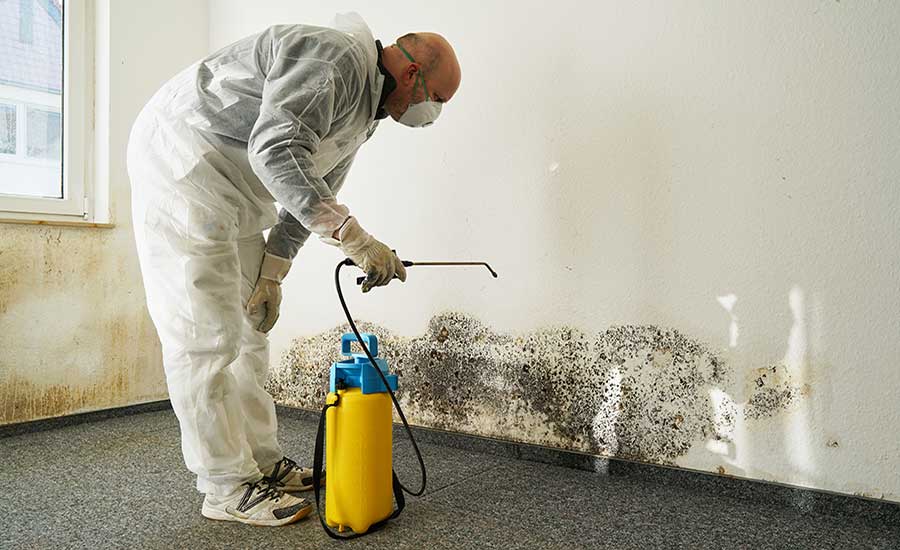
Thermal imaging, borescope inspection and meter readings locate the water source before anything is opened up.
6-mil barriers, sealed edges, decontamination chamber and HEPA-filtered negative pressure so nothing migrates.
Affected drywall, insulation, carpet and ceiling tile cut out and bagged inside the containment.
Detailed vacuuming and damp-wiping of every remaining surface, including framing and cavity faces.
The assembly is dried and verified before it is closed up — never sealed damp.
Third-party visual inspection, moisture verification and air sampling against an outdoor control.
Find the moisture source, map the affected area, define containment boundaries.
Barriers built, negative air established, occupants and unaffected areas protected.
Material removal, HEPA cleaning, antimicrobial treatment, structural drying.
Independent hygienist verifies Condition 1; only then does reconstruction begin.
| Water activity (aₔ) | What it means | Typical species |
|---|---|---|
| Below 0.70 | Effectively no growth | — |
| 0.70 – 0.80 | Dry-tolerant species establish | Aspergillus restrictus group |
| 0.80 – 0.90 | Most common indoor growth | Aspergillus, Penicillium |
| Above 0.90 | Sustained saturation required | Stachybotrys chartarum |
If you can see it, testing rarely changes the plan — the response to visible growth is the same regardless of species. Testing is worth it when growth is suspected but not visible, when a tenant or buyer needs objective evidence, or as post-remediation clearance.
On non-porous surfaces such as tile and glass, bleach is a legitimate disinfectant. On drywall and wood it bleaches the pigment while the hyphae survive in the water the bleach just delivered. It looks clean and regrows.
Deliberately not. We arrange an independent hygienist so the result carries weight with you, your insurer and any future buyer. A remediator grading their own homework is worth nothing.
A contained bathroom or closet is usually two to three days. A whole-floor HVAC contamination runs seven to fourteen, plus clearance turnaround of one to three days for laboratory results.
Over 2,400 completed projects and a 4.9/5 average rating across residential and commercial clients.
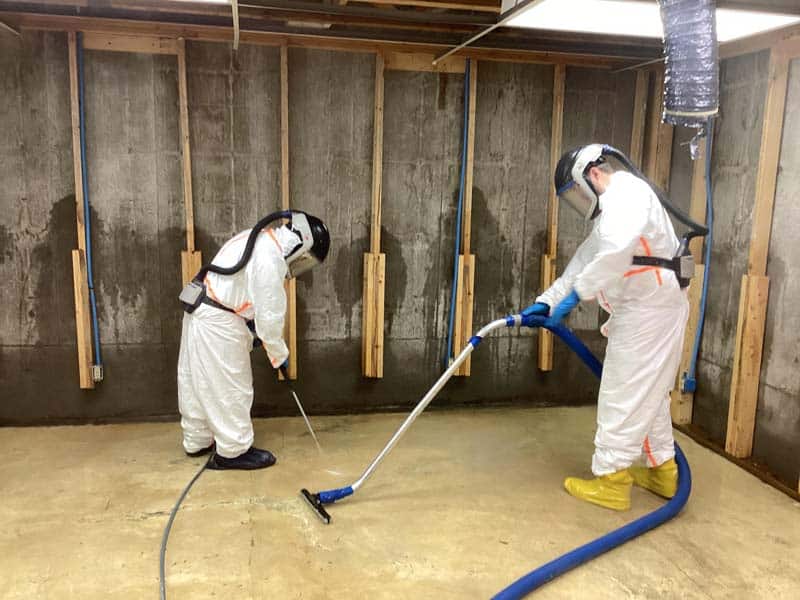
Extraction within the hour, structural drying to a documented dry standard, and moisture logs your adjuster will accept …
Explore
Recurring janitorial routes, post-construction fine cleaning and deep sanitising — by vetted crews who work around your …
Explore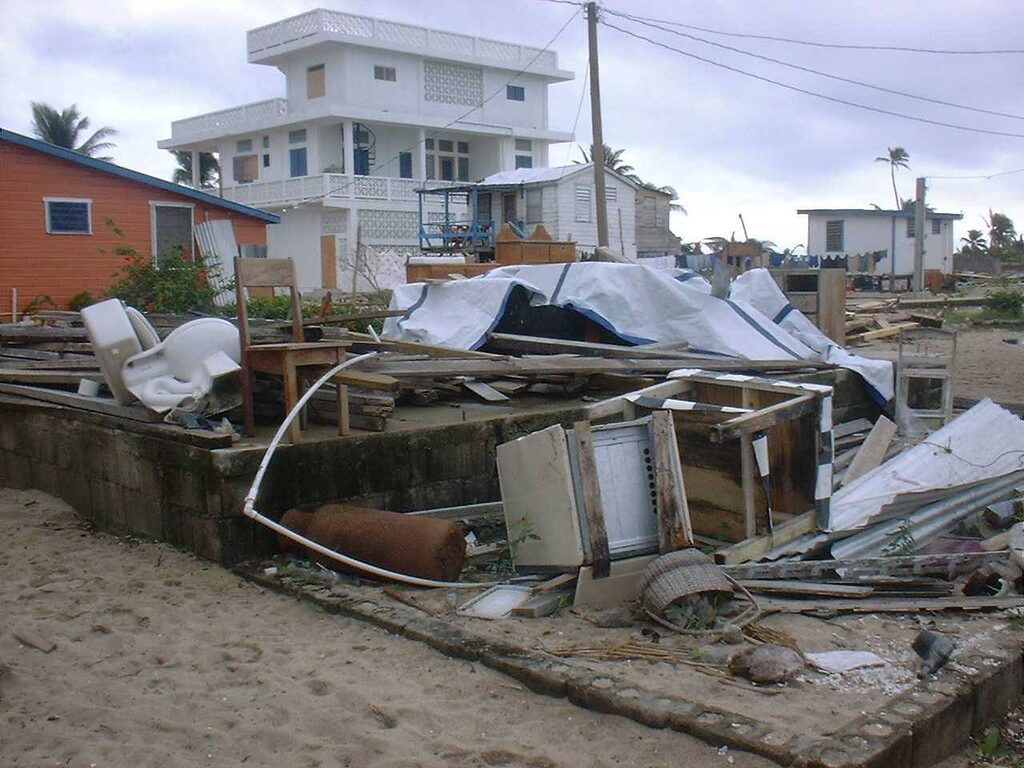
Pre-season hardening, pre-landfall staging and post-storm stabilisation — from tarping a roof at dawn to rebuilding an e…
ExploreTell us what happened and a coordinator will call you back within 15 minutes — day, night, weekend or holiday.